
A sharp pain shoots through your jaw at 9 PM on a Friday. Your face swells overnight after a sports injury. Or your permanent tooth gets knocked out in an accident. These moments turn calm days into panic.
According to recent CDC data, tooth disorders drive nearly 2 million emergency department visits annually in the US, though many could be handled more effectively (and affordably) by a dentist. At Premier Care Dental Group in Pasadena, we see this pattern weekly—patients who waited too long or went to the wrong place first.
This guide gives you clear criteria for when to call, exact first-aid steps that actually work, and a detailed preview of what happens in our office so you arrive prepared and leave relieved. No vague advice—just the practical information you need when every minute counts.
What Qualifies as a Dental Emergency?
A true dental emergency involves immediate risk to your tooth, significant pain, uncontrolled bleeding, or spreading infection. Delaying care can lead to tooth loss, abscess spread to the neck or bloodstream, or more expensive repairs later.
Not every issue is an emergency. A mild sensitivity or small chip without pain can usually wait for a regular slot. But severe symptoms demand same-day or after-hours attention.
Recent trends show a decline in ED visits for dental issues as more people access dedicated emergency dental care, but preventable visits still cost the system billions.
7 Signs You Need an Emergency Dentist Right Now
Call immediately if you experience any of these:
- Severe Tooth Pain That Won’t Quit Pain that wakes you at night, throbs constantly, or doesn’t respond to over-the-counter ibuprofen or acetaminophen signals pulp inflammation or infection. Radiating pain to the ear, jaw, or neck makes it more urgent. Real scenario: A patient ignored escalating pain for days. By arrival, the infection had formed an abscess. Early intervention could have saved the tooth with simpler treatment.
- Knocked-Out (Avulsed) Tooth This is the most time-sensitive. For permanent teeth, re-implantation within 30-60 minutes offers the best success rate. Handle the tooth by the crown only—never the root. Rinse gently if dirty (no scrubbing), and try to reinsert it yourself or store in milk/saline. Call us en route.
- Chipped, Cracked, or Broken Teeth Sharp edges that cut your tongue, exposed dentin causing sensitivity, or a fracture reaching the nerve require prompt evaluation. Large breaks risk further cracking or infection.
- Facial or Gum Swelling and Abscesses Swelling that affects your eye, throat, or breathing is a red-flag medical emergency—head to the ER. Otherwise, a pimple-like bump, pus, fever, or bad taste indicates infection needing drainage and antibiotics.
- Uncontrolled Bleeding Bleeding that soaks gauze after 30+ minutes of pressure, especially post-extraction or from trauma.
- Lost Filling, Crown, or Bridge Exposed areas become hypersensitive and prone to fracture or decay. Temporary protection helps until you reach us.
- Jaw Pain, Loose Teeth, or Trauma Difficulty biting, misalignment after impact, or soft tissue lacerations.
Emergency Dentist vs. ER: Making the Right Call
For most dental-specific issues (tooth pain, knocked-out tooth, abscess without airway compromise), start with your dentist. We have specialized tools, can save teeth more effectively, and keep costs lower than hospital settings.
Go to the ER for:
- Uncontrolled bleeding causing lightheadedness
- Swelling blocking airway or swallowing
- Suspected jaw fracture or severe facial trauma
- Accompanying systemic symptoms like high fever with neck stiffness
At Premier Care Dental Group, we provide clear guidance over the phone to help you decide.
Immediate First-Aid Steps Before You Reach the Office
Knocked-Out Tooth Checklist:
- Find and handle by crown
- Rinse with milk or saline (avoid water if possible for long-term viability)
- Reinsert if possible and bite gently on gauze
- Or store in milk/Hank’s solution
- Call us: (626) 669-3141
- Time it—every minute counts
Severe Toothache:
- Rinse with warm saltwater
- Floss gently to remove debris
- Take OTC pain reliever (follow dosing)
- Apply cold compress externally (10-15 min)
- Avoid heat or aspirin on gums
Swelling/Abscess:
- Cold compress
- Warm saltwater rinses
- Elevate head while sleeping
- Do not lance it yourself
Broken Tooth:
- Rinse mouth
- Save fragments in milk
- Cover sharp edge with sugar-free gum or dental wax temporarily
Lost Crown/Filling:
- Clean crown (no toothpaste)
- Try re-cementing with over-the-counter temporary cement or denture adhesive
- Avoid chewing on that side
Mistake to avoid: Applying heat to swelling or using numbing gels as a long-term fix—these can worsen infection.
What to Expect When You Call Premier Care Dental Group
Our team answers calls directly during business hours and provides after-hours guidance. Expect these questions:
- What happened and when?
- Symptoms (pain scale 1-10, swelling, bleeding)?
- Any first aid attempted?
- Medical history/allergies/medications
We triage priority and get you in quickly—often same day. For true after-hours needs, we coordinate care efficiently.
Your Emergency Visit: Step-by-Step at Premier Care Dental Group
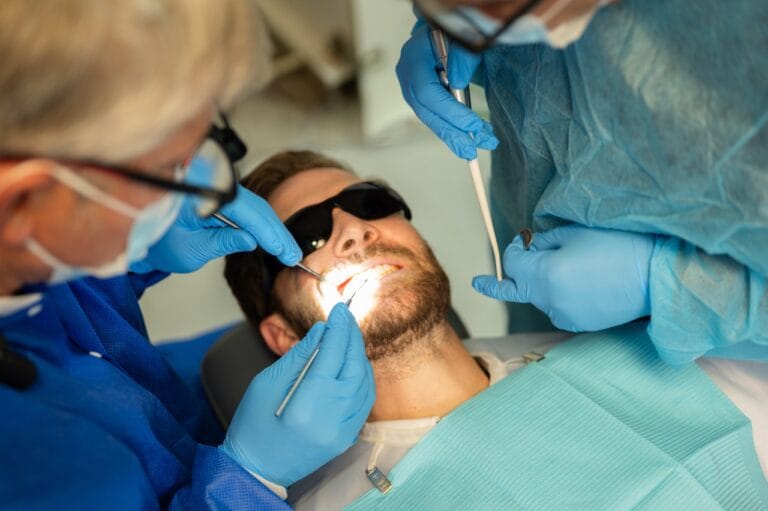
- Arrival and Welcome — Warm greeting, quick paperwork (bring ID, insurance if available).
- Assessment — Detailed exam, X-rays (digital for minimal radiation), diagnosis.
- Pain Control — Local anesthetic, possibly nitrous oxide if anxious.
- Treatment — Immediate stabilization (e.g., reimplant, drain abscess, temporary crown).
- Discussion — Full explanation of findings, options, and follow-up plan.
- Departure — Written instructions, prescriptions if needed, scheduled recheck.
Visits typically last 30-90 minutes depending on complexity. We focus on comfort and long-term solutions, not just quick fixes.
Common Treatments and Pain Management
- Root Canal Therapy for infected pulp
- Splinting for loose teeth
- Bonding/Composite Repair for chips
- Abscess Drainage + Antibiotics
- Re-cementation or Temporary Restorations
Modern techniques and good numbing make procedures far more comfortable than patients expect. We discuss sedation options openly.
Post-care: Ice, soft foods, prescribed meds, and avoiding certain activities. Most patients report significant relief within hours.
Costs, Insurance, and Aftercare
Emergency visits vary by treatment. We provide transparent estimates upfront. Many insurances cover a portion of urgent care. We work with major plans and offer flexible options.
Aftercare Template (we customize this):
- Medications: [List with timing]
- Diet: Soft foods for X days
- Activity: Avoid [specifics]
- Warning signs: Call if [fever, increased swelling, etc.]
- Follow-up: Date/time
Preventing the Next Emergency
Daily Workflow We Recommend:
- Brush twice daily with fluoride toothpaste
- Floss once
- Wear mouthguard for sports
- Regular check-ups (every 6 months)
- Address small issues before they escalate
- Know your family’s dental history
A strong preventive relationship with your dentist reduces emergencies dramatically.
FAQ: Your Top Emergency Dental Questions Answered
How fast do I need to be seen for a knocked-out tooth?
Ideally within the hour. Success drops significantly after 60 minutes, but still attempt care even if delayed.
Will I get pain relief at the first visit?
Yes—our priority is making you comfortable. Most leave with substantial relief.
What if I don’t have a regular dentist?
We welcome new patients in emergencies and help transition to ongoing care.
Are emergency visits more expensive?
They focus on stabilization. Follow-up definitive care is planned to be cost-effective.
Can kids have dental emergencies too?
Absolutely. We handle pediatric cases gently, with parent involvement.
What’s the difference between urgent and emergency?
Emergency: Immediate threat (pain, infection spread, tooth viability). Urgent: Needs attention within 24-48 hours.
Should I take antibiotics before calling?
Never self-medicate with leftovers. We assess and prescribe appropriately.
Ready When You Need Us
Dental emergencies test your preparedness, but quick action and expert care make the difference between saving a tooth and losing it. At Premier Care Dental Group in Pasadena, our experienced team delivers compassionate, efficient care focused on your comfort and long-term oral health.
Don’t wait in pain or worry. Call us at (626) 669-3141 or visit our office at 310 S Lake Ave, Ste B1, Pasadena, CA 91101. We’re here to help—day or night guidance available.
Bookmark this guide. Share it with family. And remember: acting fast today protects your smile tomorrow.
Premier Care Dental Group provides general, family, cosmetic, and emergency dentistry in Pasadena. This article is for educational purposes. Always seek professional care for your specific situation.