
Most people don’t think about a filling or crown again once they leave the dental chair — until something goes wrong. A filling cracks on a popcorn kernel. A crown loosens after a decade. Sensitivity returns under a tooth that was “fixed” years ago.
Here’s the reality that’s worth knowing upfront: restorations don’t fail on a fixed schedule. The same composite filling can last 5 years in one mouth and 12 in another. A crown placed identically in two patients — same material, same dentist, same tooth — can outlast one patient’s expectations while failing the other’s within a few years. The difference almost always comes down to what happens after the appointment.
This guide gives you the honest lifespan data for every major type of crown and filling, the science-backed reasons they fail early, and a practical maintenance playbook that significantly extends the life of every restoration you have or will ever get.
Why Restorations Fail Before They Should
A 2022 retrospective study tracking over 1,000 crowns placed across nearly four decades found that the vast majority that failed early had one thing in common: not material failure, but patient-side variables — grinding, poor hygiene, and high-sugar diets. As one long-term prosthodontic study put it bluntly: “a dominant limiting factor in crown longevity is the patient’s behavior and not the restoration itself.”
That’s both the bad news and the good news. You have more control than you might think.
How Long Do Dental Crowns Last?
The average dental crown lasts 10 to 15 years. That’s the honest middle ground from multiple peer-reviewed studies, and it’s what most dentists use for planning purposes. A landmark study tracking 2,340 crowns placed by a single experienced prosthodontist found that 97% remained fully functional at 10 years and 85% maintained optimal performance at 15 years.
But “average” buries a lot of useful information. The actual range is 5 years to well over 30 years, depending on material choice and daily habits. A separate 50-year follow-up study published in the Journal of Prosthetic Dentistry found that metal-ceramic crowns had an estimated mean survival of 47.5 years — with gold crowns, ceramic veneers, and all-ceramic crowns showing 100% survival at the 50-year mark in a group of patients with excellent oral hygiene and annual follow-up care.
That number is extraordinary, but the conditions behind it are instructive: consistent care, regular monitoring, and no destructive habits like grinding.
Crown Lifespan by Material
| Crown Material | Average Lifespan | Survival Rate at 10 Years | Best For |
| Gold / metal alloy | 20–30+ years | ~96% | Molars; patients who grind |
| Porcelain-fused-to-metal (PFM) | 10–20 years | ~90% | Back teeth; balance of strength + aesthetics |
| Zirconia | 15–25 years | ~93–95% | All areas; high strength + natural look |
| All-ceramic / lithium disilicate | 10–15 years | ~75–80% | Front teeth; aesthetic priority |
| Temporary (resin) | 2–6 weeks | N/A — short-term use only | Placeholder while permanent crown is made |
A few things worth noting here. Gold crowns have the deepest clinical track record of any material — over 150 years of use — and their wear rate closely matches natural tooth enamel, meaning they’re gentler on opposing teeth than harder ceramics. Zirconia is the newer standard for strength-plus-aesthetics, but monolithic zirconia (solid, not layered with porcelain) tends to outperform layered versions in high-bite-force situations. All-ceramic crowns on front teeth, where chewing loads are lighter, frequently outlast their statistical averages precisely because the stress environment is gentler.
The 5 Factors That Determine How Long Your Crown Lasts
1. Location in the mouth. Molars absorb far more chewing force than front teeth. A crown on a first molar is under orders of magnitude more stress daily than the same crown on a central incisor. Back-tooth crowns reliably wear faster regardless of material.
2. Bruxism (teeth grinding). This is the single biggest controllable variable. Unmanaged grinding generates bite forces several times greater than normal chewing — enough to fracture even zirconia and split porcelain from metal. If you grind, your crown’s lifespan is under permanent threat without intervention.
3. Oral hygiene at the margin. The crown itself cannot decay. The natural tooth underneath it can. Bacteria accumulate at the junction between crown and tooth (the margin), and if plaque isn’t removed consistently, secondary caries develop under the crown — one of the most common causes of crown failure. No restoration lasts when the foundation crumbles.
4. Quality of placement and fit. A crown that doesn’t seat precisely creates micro-gaps at the margin where bacteria accumulate. A bite that isn’t correctly adjusted puts uneven stress on the restoration. These are provider-side variables — another reason choosing an experienced dentist matters as much as choosing quality materials.
5. Regular professional monitoring. Research consistently shows patients who attend biannual checkups experience up to 60% longer crown longevity compared to those who only come in for emergencies. Your dentist can detect early margin breakdown, bite changes, and hairline fractures before they become full failures.
Warning Signs Your Crown Needs Attention
Don’t wait until something breaks. Book a prompt appointment if you notice:
- Sensitivity to temperature or pressure that wasn’t there before — can signal decay forming under the crown
- Pain when biting — often indicates a bite alignment problem or a cracked crown
- Visible dark line at the gumline on a PFM crown — the metal base showing as gum tissue recedes; not dangerous, but often warrants replacement for aesthetic or structural reasons
- Crown feels loose or slightly mobile — cement has washed out; needs re-cementation before bacteria colonize the gap
- Gum swelling or persistent soreness around the crown — possible infection at the margin
- A crack or chip you can see or feel — even small chips in layered porcelain can propagate
How Long Do Dental Fillings Last?
The lifespan of a dental filling ranges from 5 to 30 years, depending almost entirely on material choice. That range feels comically wide until you understand what drives it.
Filling Lifespan by Material
| Filling Material | Average Lifespan | Notes |
| Composite resin (tooth-colored) | 5–10 years | Most common today; shorter lifespan than amalgam but improving rapidly |
| Amalgam (silver) | 10–15 years | Durable and cost-effective; declining use due to mercury concerns and aesthetics |
| Gold / metal alloy | 15–30 years | Most durable; expensive; rarely used for cosmetic reasons |
| Ceramic / porcelain inlay | 10–15 years | Strong; stain-resistant; requires lab fabrication |
| Glass ionomer | 3–5 years | Low strength; used in low-stress areas, pediatric cases, root surfaces |
Composite resin is now the most commonly placed filling in modern dentistry — dentists prefer it because it bonds directly to tooth structure (requiring less removal of healthy tooth), it’s versatile, and patients prefer the aesthetics. But it wears faster than amalgam, particularly in large posterior fillings under heavy chewing load. A 2010 study set the average lifespan at approximately 7 years; a 2014 follow-up found that small composite fillings with excellent patient hygiene can reach or exceed 10 years consistently.
Amalgam has a well-earned durability reputation. A 2016 study found the average age of an amalgam filling at the time of replacement was approximately 15 years. Research from 2008 showed amalgam survival in private practice settings ranging from 7 to over 44 years — an extraordinary range that again underscores the role of patient behavior.
The Amalgam Question: Should You Replace Your Silver Fillings?
This is one of the most common questions dentists hear, and the answer deserves a nuanced response.
Amalgam contains approximately 50% elemental mercury, which can release small amounts of vapor during chewing. The FDA currently recommends that high-risk groups — including pregnant women, breastfeeding mothers, children under 6, people with kidney problems, and those with certain neurological conditions — avoid new amalgam fillings when alternatives are available.
Critically, the FDA does not recommend removing intact, functioning amalgam fillings in healthy adults. The removal process itself causes a temporary spike in mercury vapor exposure that exceeds anything the filling would produce over years of normal function. If your amalgam fillings are intact and your dentist finds no underlying decay, leave them in place and monitor them at your regular checkups.
If your amalgam fillings are cracked, leaking, breaking down, or have secondary decay forming beneath them, replacement with composite or ceramic is both clinically appropriate and an opportunity to eliminate the mercury concern simultaneously.
Warning Signs Your Filling Is Failing
- Tooth sensitivity that returns after years of none — bacteria may be infiltrating a microcrack
- Visible crack or fracture in the filling — especially in old, large amalgams that have expanded and contracted through years of temperature cycling
- Dark shadow or discoloration at the filling edge — can indicate secondary decay forming around the restoration
- A rough or sharp edge you can feel with your tongue — filling material has chipped or worn unevenly
- Pain when biting — filling may have shifted, creating a high spot in the bite
- The filling fell out — common in older restorations; the tooth needs prompt treatment to prevent rapid decay in the unprotected cavity
Crowns vs. Fillings: How Their Maintenance Needs Differ
There’s a common misconception that crowned teeth need less care because they’re “protected.” In reality, crowns have a specific vulnerability that fillings don’t: the margin — the junction between the crown and the natural tooth at the gumline.
| Dental Crown | Dental Filling | |
| Can the restoration itself decay? | No | No (but tooth around it can) |
| Main failure vulnerability | Margin decay; cement washout; fracture (ceramic) | Microleakage; secondary decay at edges; fracture (amalgam) |
| Flossing technique | Extra care needed at crown margin; floss threader if needed | Standard technique |
| Grinding risk | High — fractures porcelain; loosens cement | High — cracks large fillings |
| Most common replacement reason | Margin decay; aesthetic failure (PFM) | Secondary decay; crack/fracture |
| DIY danger sign | Looseness or temperature sensitivity | Sharp edge; pain on biting |
The Complete Maintenance Guide for Crowns and Fillings
Daily Oral Hygiene Habits That Protect Restorations
The single most impactful daily habit for restoration longevity isn’t complicated: brush twice, floss once, and don’t skip the areas that feel “fine.”
More specifically:
- Brush at a 45-degree angle to the gumline, ensuring the bristles reach the crown margin and filling edges where plaque accumulates. This is where secondary decay initiates — not in the middle of the restoration, but at its edges.
- Floss gently but fully around crowned teeth. The motion should curve around the tooth in a C-shape and slide just beneath the gumline. Snapping floss straight down can dislodge poorly cemented crowns — use a gentle side-to-side motion instead.
- Use fluoride toothpaste. Fluoride doesn’t protect the restoration itself, but it strengthens the natural tooth enamel directly adjacent to every filling and crown margin. That boundary is where decay starts.
- Consider an electric toothbrush. Clinical studies consistently show oscillating-rotating and sonic electric brushes remove significantly more plaque than manual brushes, particularly around complex surfaces like crown margins.
Dietary Choices That Make or Break Longevity
Diet affects restorations in two ways: mechanically (what you bite down on) and chemically (acid and sugar exposure at restoration margins).
Mechanical threats to avoid:
- Ice — the hardest thing most people regularly put in their mouths, and a leading cause of crown chips and filling fractures
- Hard candy, popcorn kernels, and nuts — unpredictable hardness; a single bite on a kernel has cracked countless porcelain crowns
- Sticky foods (caramel, taffy, gummy vitamins) — pull at crown cement and dislodge poorly bonded restorations
- Using your teeth as tools — this one’s self-explanatory but worth saying: your teeth are not scissors, bottle openers, or packaging tools
Chemical threats to manage:
- Frequent sugary or acidic drinks (soda, sports drinks, fruit juice) feed the bacteria that attack restoration margins. If you consume them, use a straw and follow with water.
- Acid erosion softens enamel around filling margins, creating a weakened zone that invites decay. Limit acidic food exposure and wait 30 minutes before brushing after acidic meals.
The Night Guard: The Most Underused Protective Tool in Dentistry
Bruxism (nighttime teeth grinding) affects an estimated 8–31% of adults, many of whom have no idea they do it until a dentist notices the wear patterns. The forces generated during bruxism can be 6–10 times greater than normal chewing load — enough to fracture zirconia, split porcelain from metal, and crack even gold crowns over time.
A custom-fitted night guard — fabricated from a dental impression for a precise fit — distributes bite force evenly and creates a physical barrier between your upper and lower restorations. It’s one of the most cost-effective investments in restoration longevity available, typically running $300–$600 and potentially saving thousands in premature crown and filling replacements.
If your dentist has mentioned bruxism or you wake up with jaw soreness or headaches, ask about a night guard at your next visit. Don’t substitute a sports mouthguard — these are too thick and can actually worsen clenching habits.
What Your Six-Month Checkup Should Actually Include
Routine checkups aren’t just for cleaning. For patients with existing restorations, a thorough examination should include:
- Visual inspection of all crown margins and filling edges for gaps, discoloration, or recession
- Bite assessment — checking that crowns and high fillings aren’t creating uneven force distribution
- Probing around crowned teeth — pocket depth readings catch early gum disease at crown margins before it undermines the restoration
- Percussion and sensitivity testing — tapping a crowned tooth or applying temperature can reveal underlying pulp issues before they become emergencies
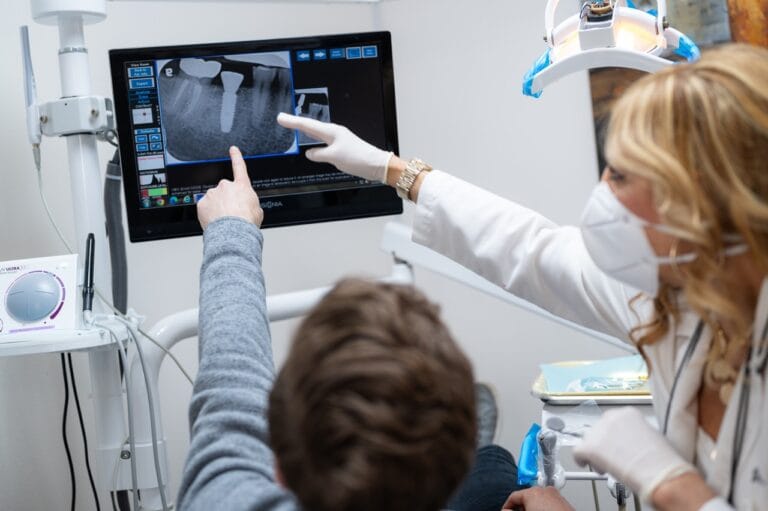
- Radiographic monitoring — X-rays every 12–24 months to detect secondary decay beneath restorations that’s invisible clinically
If your last checkup didn’t include these, ask your dentist to specifically address your restorations next time. Being an informed patient gets better care.
Mistakes That Silently Kill Restorations Early
- Rinsing immediately after brushing. Washing away fluoride toothpaste removes protection from restoration margins. Spit, don’t rinse.
- Skipping flossing around crowned teeth. “It feels fine” is not a reason to skip. Decay at crown margins starts invisibly and is painless until it’s advanced.
- Ignoring a bite that feels “a little high.” A crown or filling that sits even fractionally above the bite plane concentrates abnormal force on every chew. Left uncorrected, it causes pain, cracks the restoration, and can traumatize the underlying tooth. Call your dentist — this is a quick, free adjustment.
- Waiting until it hurts to come in. Pain means the problem has progressed well beyond its earliest, most treatable stage. A loose crown that’s ignored for weeks exposes the prepared tooth stub to bacteria; a cracked filling that’s tolerated gives decay a runway.
- Assuming old restorations are fine if they don’t hurt. Secondary decay under an old filling or around a crown margin is painless until it reaches the pulp. Regular X-rays are the only reliable detection method.
- Chewing only on one side to “protect” a new restoration. Uneven chewing loads actually stress restorations unpredictably. Eat normally; let the restoration function as designed.
Frequently Asked Questions
Can a dental crown last a lifetime?
Under the right conditions — strong material (gold or zirconia), excellent oral hygiene, no bruxism, and consistent professional monitoring — yes, some crowns do last a lifetime. A 50-year follow-up study documented crowns with 100% survival at that mark in patients with ideal hygiene and annual dental care. For most people in typical conditions, planning for a 15–25 year lifespan is more realistic, with the expectation that the crown itself may outlast the underlying tooth’s health if decay isn’t managed.
How do I know if my filling needs to be replaced?
Common signs include new or returning sensitivity, pain when biting, a rough or sharp edge you can feel with your tongue, visible darkening or discoloration at the filling’s edge, and the filling feeling loose or different. The most reliable method, though, is your dentist’s assessment using visual examination, probing, and radiographs — many failing fillings give no symptoms until they’ve failed significantly.
Is it worth replacing old amalgam fillings with composite?
Electively replacing intact, functioning amalgam fillings isn’t recommended by either the ADA or FDA. However, when an amalgam filling needs replacement due to cracking, decay, or failure, switching to composite or ceramic is a reasonable and common choice. The amalgam-phase argument is most relevant for high-risk groups (pregnant women, children under 6) when choosing a new filling material — not for removing existing intact ones.
Does a crown protect the tooth from decay?
The crown covers the visible tooth structure, but the natural tooth beneath it — particularly at the gumline margin — remains vulnerable to decay. Bacteria that accumulate at the junction between crown and tooth can cause “recurrent caries” (secondary decay), which is one of the most common reasons crowns eventually fail. Excellent brushing and flossing around the crown margin is the primary defense.
My temporary crown has been on for three months — is that okay?
No. Temporary crowns are designed for 2–6 weeks maximum. The cement used is intentionally weak to allow easy removal, which means bacteria can infiltrate the margin relatively easily. After a few months, the temporary is likely leaking, and decay may be forming beneath it. Contact your dentist promptly to get the permanent crown placed.
Can I eat normally with a new crown or filling?
With a permanent crown: yes, after 24 hours. With a composite filling: yes, immediately — the material is light-cured and hardened in the dental chair. With an amalgam filling: wait 24 hours before chewing hard foods on that side, as amalgam takes time to fully harden. For any new restoration, avoid extremely hard or sticky foods in the first few days while you adjust to the bite.
Does getting a crown mean the tooth is “safe” forever?
No restoration eliminates future dental needs for that tooth. Crowned teeth still require gum care, root canal treatment is still possible if the pulp is compromised, and the tooth can still fracture at the root. Think of a crown as a high-quality cover that extends the function of a compromised tooth — not as a permanent cure.
Key Takeaways
For crowns:
- Average lifespan: 10–15 years; gold and zirconia regularly reach 20–30+ years
- Gold has the deepest clinical track record (~96% survival at 10 years); zirconia is the modern standard for strength and aesthetics
- The underlying tooth — not the crown — is what most commonly fails. Margin hygiene is everything.
- Bruxism is the leading controllable threat. A night guard is not optional if you grind.
For fillings:
- Composite (tooth-colored): 5–10 years on average; improving with better materials
- Amalgam (silver): 10–15 years; intact amalgam in healthy adults does not need elective replacement
- Gold: 15–30 years; the most durable option available
- Secondary decay at the filling margin is the most common cause of failure — not the filling material itself
For both:
- Brush at the gumline, floss daily (especially around crown margins), and use fluoride toothpaste
- Avoid ice, hard candy, and using teeth as tools
- Attend six-month checkups and make sure your dentist is actively monitoring your restorations — not just cleaning your teeth
- Sensitivity or pain after a “fixed” tooth is never normal. Don’t wait.
The single most accurate predictor of how long any restoration lasts isn’t the material, the dentist, or even the size of the cavity — it’s what you do with it every day. Restorations that are properly maintained in properly maintained mouths routinely exceed their expected lifespans. That’s a return on investment entirely within your control.
The information in this article is intended for general educational purposes. Always consult your dentist or dental specialist for personalized advice about your specific restorations and oral health needs.