
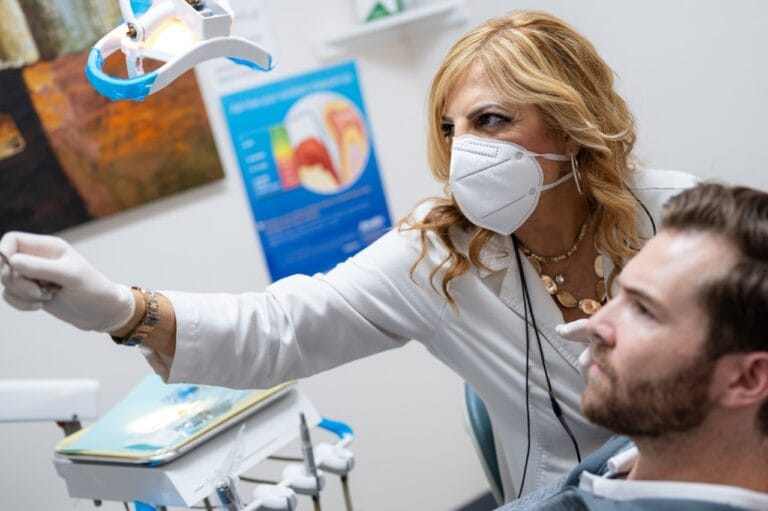
Your mouth usually gives you warnings before a dental problem turns serious. The issue is that those warnings are easy to brush off. A little bleeding when you floss, bad breath that never fully goes away, or a tooth that feels sensitive for a few days can all seem minor in the moment. But many dental problems start quietly. Early tooth decay may not hurt at first, gum disease often begins with bleeding rather than pain, and dry mouth can raise your risk of cavities and oral infections if it becomes persistent.
That is why it helps to know the early signs of dental problems before they become harder and more expensive to treat. Below are ten warning signs worth paying attention to, what they could mean, and when it is smart to call a dentist.
1. Chronic bad breath
Bad breath every now and then is not unusual, especially after coffee, garlic, or a long day without much water. Chronic bad breath is different. If it keeps coming back even after brushing, flossing, and mouthwash, your mouth may be trying to tell you something.
What it could mean: persistent bad breath can be linked to plaque buildup, gum disease, dry mouth, tooth decay, or other oral health issues. NIDCR notes that plaque buildup can contribute to tooth decay, gum disease, and bad breath, and periodontal disease can also lead to persistent bad breath.
Example: if you notice your breath seems off every morning and by midday even after brushing, the issue may not be “just bad breath.” It may be gum inflammation or bacteria collecting around teeth and gums.
When to call a dentist: if bad breath sticks around for more than a couple of weeks despite good oral hygiene, get it checked.
2. Bleeding gums
A lot of people treat bleeding gums like no big deal. They assume they brushed too hard or flossed too aggressively. That can happen once in a while, but ongoing bleeding is not something to normalize.
What it could mean: MedlinePlus says the main cause of bleeding gums is plaque buildup at the gum line, which can lead to gingivitis. CDC lists bleeding gums, swollen gums, gum recession, and loose teeth as warning signs of gum disease.
Example: if you see pink in the sink most mornings but your mouth does not hurt, that still matters. Gum disease often starts quietly and does not wait for pain to show up first.
When to call a dentist: if your gums bleed regularly for more than a week, or if they also look swollen or tender, book an appointment.
3. Tooth sensitivity
A sharp twinge from ice cream or coffee can be easy to dismiss, especially if it comes and goes. But repeated tooth sensitivity is one of the most common early signs of dental problems.
What it could mean: sensitivity can be linked to enamel wear, exposed roots, tooth decay, a cracked tooth, or gum recession. Early cavities do not always cause steady pain, which is why sensitivity can be the first clue that something is changing. NIDCR says early tooth decay often does not have symptoms, which makes subtle signs more important.
Example: imagine taking a sip of cold water and feeling a quick sting in one tooth, then feeling fine the rest of the day. That does not prove the tooth is okay. It may just mean the problem is still early.
When to call a dentist: if one tooth keeps reacting to hot, cold, sweet, or pressure, it deserves an exam.
4. Dry mouth
Dry mouth does not sound dramatic, which is why many people ignore it. But saliva does more than keep your mouth comfortable. It helps protect your teeth and soft tissues.
What it could mean: NIDCR says persistent dry mouth can make chewing, swallowing, and talking more difficult and raises the risk for tooth decay and fungal infections because saliva helps keep harmful germs in check. Dry mouth can also be tied to medications, certain health conditions, or mouth breathing.
Example: if your mouth feels sticky at night, you always need water nearby, or food feels harder to swallow, that is more than an annoyance. It may be setting you up for cavities and irritation.
When to call a dentist: if dry mouth is happening often or has lasted more than a couple of weeks, bring it up.
5. Jaw pain or soreness
Jaw pain gets blamed on stress all the time, and sometimes that is true. But it should not be ignored when it keeps happening.
What it could mean: jaw pain can be related to clenching, grinding, a bite problem, TMJ issues, or even salivary gland problems. NIDCR notes that salivary gland disorders can cause pain in the face or mouth, swelling, and difficulty opening the mouth.
Example: if you wake up with an achy jaw, headaches, or tenderness near your ears, you may be grinding your teeth in your sleep. If it hurts to open wide or chew, it is worth evaluating before the strain gets worse.
When to call a dentist: if jaw pain repeats, affects chewing, or comes with clicking, locking, or limited opening, schedule a visit.
6. White patches in the mouth
White patches are one of those signs people often notice and then try to ignore. That is the wrong move.
What it could mean: MedlinePlus lists thrush as a yeast infection that causes white patches in the mouth and also notes leukoplakia, which causes white patches of excess cell growth on the cheeks, gums, or tongue. White or red patches that do not go away deserve professional evaluation. MedlinePlus patient guidance specifically lists white or red patches in the mouth as a reason to contact a dentist.
Example: if you spot a white patch on your tongue or inner cheek that has been there for more than a week or two, do not assume it is nothing just because it is painless.
When to call a dentist: if a white patch persists, spreads, or comes with soreness, book an exam promptly.
7. Loose teeth
Adult teeth should not feel loose. Ever. Even slight movement can be a sign that something deeper is going on.
What it could mean: CDC and NIDCR both list loose teeth as a warning sign of more advanced gum disease. Gum disease can damage the tissues and bone that hold teeth in place, and by the time teeth feel mobile, the issue is no longer minor.
Example: maybe one front tooth feels slightly different when you bite into a sandwich, or you notice a subtle shift when flossing. That is not something to “keep an eye on” for months.
When to call a dentist: call as soon as you notice looseness, movement, or a change in how your teeth fit together.
8. Mouth sores that do not heal
Most small mouth irritations go away fairly quickly. The ones that do not are the ones you need to pay attention to.
What it could mean: MedlinePlus notes that mouth sores can be caused by irritation from a sharp or broken tooth, poorly fitting dentures, biting the cheek, braces, and other factors. A sore that lingers may be caused by something simple, but it still needs evaluation if it does not heal.
Example: if you have a sore spot on your cheek that keeps rubbing against a rough tooth and it is still there after a couple of weeks, it is time to have that checked.
When to call a dentist: if a sore lasts more than two weeks, keeps returning, or is getting worse, do not delay.
9. Painful chewing or pain when you bite
Pain only when chewing is easy to work around. People just start chewing on the other side. That is exactly why it gets ignored.
What it could mean: painful chewing can be a sign of gum disease, a cracked tooth, or an issue around the root of the tooth. CDC lists painful chewing as a warning sign of gum disease, and cracked teeth are well known for causing pain that comes and goes under pressure.
Example: if you bite into something crunchy and feel one sharp flash of pain, then nothing, it may still point to a crack or another structural problem.
When to call a dentist: if biting hurts more than once or keeps happening on the same tooth, schedule a visit soon.
10. Changes in how your teeth fit together
This one surprises people because they do not always think of it as a dental symptom. But if your bite suddenly feels off, your mouth may be signaling a problem.
What it could mean: CDC includes changes in how your teeth fit together when biting as a sign worth noticing, especially in the context of gum disease and shifting teeth. Bite changes can also happen with grinding, tooth movement, swelling, or damage to a tooth.
Example: maybe your teeth used to come together normally, but now one side hits first, or a tooth feels “higher” than it used to. That is not just in your head. It can be a sign that something has changed.
When to call a dentist: if your bite feels different, uncomfortable, or unstable, do not ignore it.
Why these early signs matter
The biggest mistake people make is waiting for a dental problem to become painful before they take it seriously. That sounds logical, but it is not how oral health problems usually behave. Early tooth decay can be symptom-free. Gum disease often starts with bleeding and inflammation, not pain. Dry mouth can quietly raise your cavity risk. White patches and mouth sores may not hurt much at all. By the time something becomes severe enough to force action, treatment is often bigger than it needed to be.
That is why spotting the early signs of dental problems matters. It gives you a chance to deal with the issue while it is still manageable.
When to stop watching and start calling
A good rule is simple. If a symptom is recurring, lasting longer than you expected, or getting worse, stop watching it and get it checked. That applies to chronic bad breath, bleeding gums, tooth sensitivity, dry mouth, jaw pain, white patches, loose teeth, mouth sores, painful chewing, and bite changes.
Your mouth usually gives you some warning. The real question is whether you listen while the problem is still small.If you are noticing early signs of dental problems like bleeding gums, tooth sensitivity, jaw pain, dry mouth, or loose teeth, do not wait for the issue to become painful. Premier Care Dental Group provides comprehensive dental care in Pasadena for children and adults, and our team can help you understand what these warning signs mean and what to do next. Call (626) 669-3141 or request an appointment through Premier Care Dental Group to get ahead of the problem before it gets worse.