
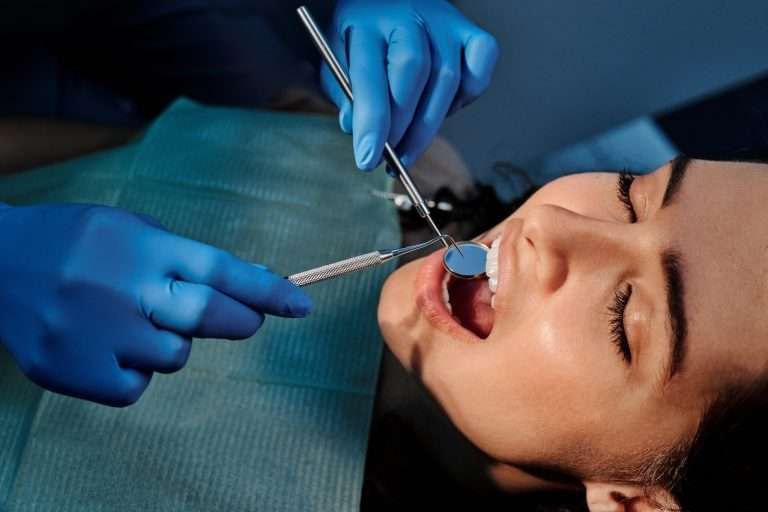
If we tell a patient they’re going to need a filling or even light oral surgery for gum problems, they usually take it in stride. If we mention a root canal, however, people’s blood pressure tends to rise. Fortunately, these tried-and-true procedures that clear out infected and abscessed tissue, save a tooth’s root, and add a prosthetic crown, are no more fearsome than filling a cavity, though they do take more time.
Yes, we’ve all heard unpleasant events compared to root canals – such as “I’d rather have a root canal than sit through another long meeting” – but times have changed in dentistry. Let’s go through some of the reasons why root canals are no longer something to be dreaded.
Advances in Dental Pain Management
Some of us carry around childhood memories of getting fillings and being jabbed with what seemed like an enormous needle full of Novocaine. While it might have blocked the pain associated with drilling, the pain of the jab itself was pretty intense. If you were already suffering from a painful toothache, that initial pain might have been even worse. These days, before lidocaine or another numbing drug is injected, the area is pre-numbed with a topical solution and the injection uses a tiny and very sharp needle.
Of course, that’s only the beginning. Dentists have learned a great deal about how oral discomfort works over the last several decades. Problems in the past were often caused when the anesthetic started to wear off mid-treatment. Fortunately, today’s best dentists understand anesthesia better than ever and can reliably ensure that the numbness will last long enough.
Dental Phobia Awareness and Sedation Dentistry
One thing that can make our perception of pain much more intense is fear, so people with dental phobia are going to be especially concerned before getting a root canal. Even knowing intellectually that root canals are nothing to fear may not help because true phobias are beyond our ability to rationalize.
There are many techniques for dealing with dental phobias but, when all else fails, sedation dentistry can ensure that patients are completely unaware during the entire process. Often, the 30-60 procedure feels as if it hasn’t even started when it’s complete! Naturally, you will be unable to drive yourself home following the procedure due to the lingering effects of the sedation, so you will have to have a designated person pick you up following the root canal. If you believe sedation dentistry makes sense in your case, please feel free to bring it up with a member of our knowledgeable and compassionate team.
Toothache Pain
Whatever discomfort that may be involved with a root canal – even in the old days – is nothing compared to the searing pain commonly associated with the advanced tooth infections that root canals often treat. Even when an infection or abscess is present, the discomfort may remain minor if the infection is caught earlier. If you start to feel any kind of toothache, do not wait to make an appointment. Every second before you see your dentist raises the possibility of debilitating pain.
The good news is that seeing your dentist in time means that you are more likely to have spotted the problem early enough that a filling may be sufficient and a root call won’t be needed.
Your Oral Health Home in Pasadena and the San Gabriel Valley
If you are feeling any sort of tooth or gum discomfort then the most important thing is to make an appointment with a quality dental office ASAP. It’s the only way to stop what might be a very minor issue from becoming something more advanced and a lot more painful, seemingly overnight. Even if your teeth are just fine at the moment, it’s important to have a regular dentist’s office for preventive general dentistry – twice yearly cleanings and annual exams so you can stop problems early or even before they start.
If you’re looking for a dentist office in the Pasadena and San Gabriel Valley area, Premier Care Dental Group is here to offer complete care for the whole family with a friendly, gentle, and personal touch. Get in touch today by calling us at the number on your screen or by filling out the contact form on this page.
Frequently Asked Questions
How badly does a root canal hurt?
A root canal hurts far less than the toothache that forces you to get one. During the procedure, modern anesthesia makes it 0–2 out of 10 for 94% of patients—no worse than a regular filling. The worst pain (7–10/10) is the infection you already have before treatment starts. After the root canal, expect only mild soreness rated 2–5/10 that lasts 1–3 days and is easily controlled with ibuprofen. Harvard Health and the American Association of Endodontists confirm in 2025 data that root canals relieve pain, they don’t cause it.
What’s the most painful part of a root canal?
The most painful part is the abscess or infection you walk in with, not the treatment itself. The anesthesia shot feels like a quick pinch for 5–10 seconds (3–4/10 at worst), then you feel nothing but pressure while the dentist works. Post-op tenderness when biting is usually 2–4/10 and disappears within 48 hours with over-the-counter painkillers. Thousands of 2025 patient reviews agree: the toothache before the appointment is always worse than anything that happens in the chair.
Can you eat after a root canal?
Yes, you can eat as soon as the numbness wears off, typically 2–4 hours after the procedure. For the first 24 hours stick to soft foods like yogurt, smoothies, mashed potatoes, soup, eggs, oatmeal, and bananas, and chew on the opposite side. Avoid anything hard, crunchy, sticky, or extremely hot/cold. By day 2–3 most people return to normal foods, and once the permanent crown is placed (usually within 2 weeks) you can eat steak, apples, or anything you want with zero restrictions.
How many hours does a root canal take?
Most root canals are completed in a single visit that lasts 30–90 minutes. Front teeth take 30–45 minutes, premolars 45–60 minutes, and molars 60–90 minutes because they have 3–4 canals instead of 1. According to Cleveland Clinic and AAE 2025 guidelines, 90% of cases finish in under 90 minutes total—shorter than most movies—and you walk out pain-free with a temporary filling or crown the same day.